I have to say that the SFAA have a wonderful spot for viewing the night sky up on Mt Tamalpais - quiet, warm (especially compared to the city when the mists come in) and with excellent viewing. They are especially lucky because once the fog blankets San Francisco, the city lights are masked and the stars can shine that bit brighter. I have to admit I was quite surprised to be able to see the Milky Way so brightly so near to the bay.
There is a good mix of levels there and they have both 'members only' and public evenings. Some bring their telescopes and laser pointers and show the wonders of the universe off to those who are interested, whilst some are there because they love the subject without the same depth of knowledge. It all makes up a really fun and varied evening with so many great stories to hear.
The SFAA is connected to a wider range of astronomical associations through the NASA network and membership is very reasonable for a year of viewing evenings and the resources available online. It's also a great place to meet new people and enjoy great company in one of the many beautiful places around the city of San Francisco. Thanks for a fantastic evening everyone!
Showing posts with label Astronomy. Show all posts
Showing posts with label Astronomy. Show all posts


Griffith Observatory
The Griffith Observatory seems to be LA's answer to its Greenwich counterpart, with excellent demonstrations of the universe and solar system, as well as a dual-system planetarium running E&S Digistar 3 on DLPs with a Zeiss Universarium for crystal clear night skies. Sadly tickets to this were sold out when I got back from my walk in the afternoon, but I was lucky enough to get a look inside when I first arrived.
There is a lot of good stuff here, and certainly more than you may expect from first looking. A Tesla Coil is fired every hour, along with a talk given by a member of staff, a public programme of events also runs, and our group was able to see an interactive presentation of how to make a comet (using water, sand, windex and dry ice). The presentation style was informal and interesting, with science questions being answered whilst guests entered.
There were once again good links to local astronomers and reasons why California should be well known in astronomical circles, as well as a live view of the sun on a smoky glass screen in one area. This was a very nice touch, as was the effect of looking at Saturn through a telescope in the same hall. The planets themselves got excellent treatment in the downstairs area, being displayed in very intuitive ways as regards size, scale and orientation.
My favourite piece in the observatory though had to be the Gottlieb Transit corridor which, at local noon, focuses the sun onto a large arc of metal to show the date and correspond to the place on the ecliptic. Sadly this wasn't well explained at all, but as someone who knows what was going on I really appreciated it.
It would be worth going again when it's not so busy, so I shall hopefully have reason to visit LA again in order to see more, but for anyone wanting to find out more about the universe this is a good place to go in Hollywood. There are hiking trails for those needing a walk as well.
 |
| Griffith Observatory |
There is a lot of good stuff here, and certainly more than you may expect from first looking. A Tesla Coil is fired every hour, along with a talk given by a member of staff, a public programme of events also runs, and our group was able to see an interactive presentation of how to make a comet (using water, sand, windex and dry ice). The presentation style was informal and interesting, with science questions being answered whilst guests entered.
There were once again good links to local astronomers and reasons why California should be well known in astronomical circles, as well as a live view of the sun on a smoky glass screen in one area. This was a very nice touch, as was the effect of looking at Saturn through a telescope in the same hall. The planets themselves got excellent treatment in the downstairs area, being displayed in very intuitive ways as regards size, scale and orientation.
My favourite piece in the observatory though had to be the Gottlieb Transit corridor which, at local noon, focuses the sun onto a large arc of metal to show the date and correspond to the place on the ecliptic. Sadly this wasn't well explained at all, but as someone who knows what was going on I really appreciated it.
It would be worth going again when it's not so busy, so I shall hopefully have reason to visit LA again in order to see more, but for anyone wanting to find out more about the universe this is a good place to go in Hollywood. There are hiking trails for those needing a walk as well.
Three Rivers Foundation (3RF)
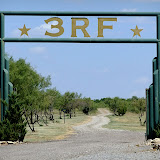
18 miles to the west of Crowell, a small town in West Texas, lies the 3RF campus out in the middle of nowhere. Out here there is no light pollution, as the nearest sources are individual ranches far on the horizon. It's flat all around, so the view of the night sky is unparalleled, and it is here that I was invited as part of my Astrotour 2010 to see the stars as I have never done before.
You may think that this part of Texas would be difficult to get to and this is certainly the case for light pollution reasons - but once there it is incredible and well worth the drive. After all, it's only 3.5 hours from the DFW Metroplex and close to Oklahoma too - a short hop for most Americans!
I visited for one of the monthly public star parties, beginning with a view of the Sun through a specially filtered telescope, then I gave a talk about how important astronomy and science education is for the world. As the sky got darker, the myriad volunteers who had come for the show opened their telescopes up to the public and I was able to see all the planets and even Pluto. In fact, one of the big draws to the campus is their 30" reflector, which gave excellent views of galaxies and the more 'invisible' objects in the universe.
3RF doesn't just open their campus for public star parties, however. There is camping (both tent and RV) for anyone wishing to stay overnight, as well as a bunkhouse for those wishing to have a bit more comfort. Their classroom has wi-fi and projectors, which get used by children's groups such as the Scouts for their badges. It's not just astronomy either, as the whole site is full of wildlife and is home to Project Prairie Wild, which emphasises the environmental sciences and conservation.
In fact 3RF has a unique draw for schools, as they offer programs for teachers and students to explore science and astronomy in a very hands-on manner. The company is extremely enthusiastic about opening up nature and the night sky to all, and this really shows in the enthusiasm, warmth and knowledge of their presenters. It was an absolutely amazing evening and I encourage everyone to find a way to get out there to see the campus and the crowd.
If you are also interested in the arts, the Three Rivers Foundation offers an Arts side in Quanah, 20 miles north of Crowell, and have teamed up with 3RF Australia to bring the whole of the night sky to both countries. There are three telescopes in the Butterfly Garden of the Comanche Springs campus which can be accessed via the web so that Australian students can experience the northern hemisphere skies.
So many thanks to Patrice, Jeff, Fred, David, Vance and all the others that made my stay so great there!
 |
| Three Rivers Foundation |
You may think that this part of Texas would be difficult to get to and this is certainly the case for light pollution reasons - but once there it is incredible and well worth the drive. After all, it's only 3.5 hours from the DFW Metroplex and close to Oklahoma too - a short hop for most Americans!
I visited for one of the monthly public star parties, beginning with a view of the Sun through a specially filtered telescope, then I gave a talk about how important astronomy and science education is for the world. As the sky got darker, the myriad volunteers who had come for the show opened their telescopes up to the public and I was able to see all the planets and even Pluto. In fact, one of the big draws to the campus is their 30" reflector, which gave excellent views of galaxies and the more 'invisible' objects in the universe.
3RF doesn't just open their campus for public star parties, however. There is camping (both tent and RV) for anyone wishing to stay overnight, as well as a bunkhouse for those wishing to have a bit more comfort. Their classroom has wi-fi and projectors, which get used by children's groups such as the Scouts for their badges. It's not just astronomy either, as the whole site is full of wildlife and is home to Project Prairie Wild, which emphasises the environmental sciences and conservation.
In fact 3RF has a unique draw for schools, as they offer programs for teachers and students to explore science and astronomy in a very hands-on manner. The company is extremely enthusiastic about opening up nature and the night sky to all, and this really shows in the enthusiasm, warmth and knowledge of their presenters. It was an absolutely amazing evening and I encourage everyone to find a way to get out there to see the campus and the crowd.
If you are also interested in the arts, the Three Rivers Foundation offers an Arts side in Quanah, 20 miles north of Crowell, and have teamed up with 3RF Australia to bring the whole of the night sky to both countries. There are three telescopes in the Butterfly Garden of the Comanche Springs campus which can be accessed via the web so that Australian students can experience the northern hemisphere skies.
So many thanks to Patrice, Jeff, Fred, David, Vance and all the others that made my stay so great there!
Arlington Planetarium
There is a point where large planetaria become too big, and the intimacy is lost. The new planetarium at the University of Texas in Arlington however manages to strike the balance between big and intimate, with its 150-seater 60' dome, run with the new Digistar 4 system from Evans and Sutherland. 6 DLPs run the planetarium, and once the lights and other effects are plugged back in, they will have quite the venue.
In fact, Arlington Planetarium has managed to do many different things within its walls - for example, $300 will get a couple two hours under the stars, dinner and wine for the perfect romantic evening. A brilliant use of the space (no pun intended) and so simple to boot. Then again there is something to be said for having an open central aisle for that kind of event to take place.
As the planetarium is part of the university, it benefits from being a university department, and so equipment can be requisitioned as and when other departments are finished with it. This has very much helped with keeping the computers powerful enough to handle the transition from D3 to D4. The whole planetarium is finishing its upgrade, so that there will be more exhibits outside for visitors. At present they have screens linked to a nationwide science reporting system, which does a very good job.
The shows tend to be an hour long - sometimes all presenter-led, sometimes beginning with a presenter-led night sky segment, then going on to an automated show. This works very well, and with a planetarium this size it's easy to put on fewer shows. Another point is that the planetarium team itself is quite small - only 3 people - but with a university there, it's easy to get students in to train up as educators.
Students are a great source of audience too; at the beginning of the year the planetarium offers cut-price tickets for students, as well as other such benefits. Live music nights and party evening use the aforementioned lights. It's an excellent resource, and it seems to be well used too. In fact, the astronomy department uses the smaller planetarium on site for labs and teaching, leaving the larger one for shows. In general a public show will only just more than half fill the place, which is a shame. It deserves to be a lot fuller.
The Planetarium at UT Arlington is a really great facility and very much worth the while to visit if in the Dallas/Fort Worth area. I'm much indebted to Amy Barraclough for showing me around and explaining the great things that the planetarium has done and will continue to do. Great stuff.
In fact, Arlington Planetarium has managed to do many different things within its walls - for example, $300 will get a couple two hours under the stars, dinner and wine for the perfect romantic evening. A brilliant use of the space (no pun intended) and so simple to boot. Then again there is something to be said for having an open central aisle for that kind of event to take place.
As the planetarium is part of the university, it benefits from being a university department, and so equipment can be requisitioned as and when other departments are finished with it. This has very much helped with keeping the computers powerful enough to handle the transition from D3 to D4. The whole planetarium is finishing its upgrade, so that there will be more exhibits outside for visitors. At present they have screens linked to a nationwide science reporting system, which does a very good job.
The shows tend to be an hour long - sometimes all presenter-led, sometimes beginning with a presenter-led night sky segment, then going on to an automated show. This works very well, and with a planetarium this size it's easy to put on fewer shows. Another point is that the planetarium team itself is quite small - only 3 people - but with a university there, it's easy to get students in to train up as educators.
Students are a great source of audience too; at the beginning of the year the planetarium offers cut-price tickets for students, as well as other such benefits. Live music nights and party evening use the aforementioned lights. It's an excellent resource, and it seems to be well used too. In fact, the astronomy department uses the smaller planetarium on site for labs and teaching, leaving the larger one for shows. In general a public show will only just more than half fill the place, which is a shame. It deserves to be a lot fuller.
The Planetarium at UT Arlington is a really great facility and very much worth the while to visit if in the Dallas/Fort Worth area. I'm much indebted to Amy Barraclough for showing me around and explaining the great things that the planetarium has done and will continue to do. Great stuff.
Maryland Science Center
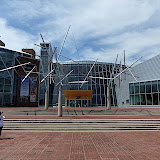
Situated in the inner harbour of Baltimore is the Maryland Science Center, an amazing addition to the wealth of urban regeneration within this industrial city. Across the harbour sits the famous aquarium, which I was sadly unable to visit this time round. Nevertheless, the Science Center more than made up for this, and I enjoyed looking at the brilliantly simple exhibits with a sense of childish wonder.
It is an awesome building from the very start, and as you look around the entrance hall you see how varied the science within actually is. Geysers are modelled on both sides as you enter, challenging you to predict when they will blow given the scientific principles behind them. Beneath you in the flooring is the night sky, to your right dinosaurs prowl, to your left the hands-on Newton's Alley makes all sorts of noises.
The principle with this is one of being extremely interactive; there aren't many pieces in the centre that aren't made to be handled, don't have a button to push or whatever. Certainly some of the dinosaurs are there to be appreciated, but even with these there are videos presenting the watcher with various theories behind the beasts - I'm pleased to report I saw no Creationist propaganda there!
I've mentioned that each exhibit is quite simple - I think the best example is of the Wonder Warehouse, where the staff have converted their storage/exhibition space into a giant hotchpotch of different guerilla experiments, from non-Newtonian fluids (cornstarch, water and a sub-woofer) to light painting (with a dark room, a selection of torches and a 20s exposure on the camera). Even the dividers are the very boxes housing their previous travelling exhibit. Everything is used, and the ingenuity shows.
I particularly liked the section on the human body, where very simple principles showed the various functions on the cardiopulmonary, digestive and nervous systems. There was even a simple 'stress monitor', inviting you to guess when your partner is lying whilst trying to guess their number. A sonar gun tells you how tall you are, and elsewhere there is a lab for everyone to try their hands at experiments.
The staff are extremely friendly and are great fun - sadly I can't remember the name of the lady who performed the excellent Laws of Motion show, but it was a tour de force of serious slapstick science presentation. The Davis Planetarium is free, and is a lovely analogue Minolta starball. It is augmented by a series of slide projectors and special effects generators, and provides a great glimpse into the night sky.
If you are in Baltimore, this is definitely a place to visit. If you are not there, then you can follow the centre on Facebook and Twitter, and keep up with its Scicasts, a downloadable podcast of recent news. An excellent centre for the Maryland area.
 |
| Maryland Science Center |
It is an awesome building from the very start, and as you look around the entrance hall you see how varied the science within actually is. Geysers are modelled on both sides as you enter, challenging you to predict when they will blow given the scientific principles behind them. Beneath you in the flooring is the night sky, to your right dinosaurs prowl, to your left the hands-on Newton's Alley makes all sorts of noises.
The principle with this is one of being extremely interactive; there aren't many pieces in the centre that aren't made to be handled, don't have a button to push or whatever. Certainly some of the dinosaurs are there to be appreciated, but even with these there are videos presenting the watcher with various theories behind the beasts - I'm pleased to report I saw no Creationist propaganda there!
I've mentioned that each exhibit is quite simple - I think the best example is of the Wonder Warehouse, where the staff have converted their storage/exhibition space into a giant hotchpotch of different guerilla experiments, from non-Newtonian fluids (cornstarch, water and a sub-woofer) to light painting (with a dark room, a selection of torches and a 20s exposure on the camera). Even the dividers are the very boxes housing their previous travelling exhibit. Everything is used, and the ingenuity shows.
I particularly liked the section on the human body, where very simple principles showed the various functions on the cardiopulmonary, digestive and nervous systems. There was even a simple 'stress monitor', inviting you to guess when your partner is lying whilst trying to guess their number. A sonar gun tells you how tall you are, and elsewhere there is a lab for everyone to try their hands at experiments.
The staff are extremely friendly and are great fun - sadly I can't remember the name of the lady who performed the excellent Laws of Motion show, but it was a tour de force of serious slapstick science presentation. The Davis Planetarium is free, and is a lovely analogue Minolta starball. It is augmented by a series of slide projectors and special effects generators, and provides a great glimpse into the night sky.
If you are in Baltimore, this is definitely a place to visit. If you are not there, then you can follow the centre on Facebook and Twitter, and keep up with its Scicasts, a downloadable podcast of recent news. An excellent centre for the Maryland area.
Rock Creek Park Nature Center and Planetarium
Set just outside the heart of Washington DC lies Rock Creek Park, where we met the National Capital Astronomer for their stargazing night. This time our visit was for the small planetarium within its grounds, situated within the Nature Center. Entrance is free, and shows are put on twice a day at weekends - 1pm for all ages, 4pm for older children and upwards.
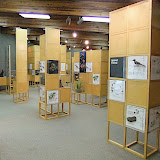
The small centre is the hub for the numerous activities that go on in the park, and as such it makes sense that the displays show visitors what is on offer when it comes to the flora and fauna. It is very tastefully done, laying out the variety of species in glass tanks or boxes with a good amount of information on the side. There is a touch table with furs and skeletons, and a sand pit for creating and learning about animal tracks.
The planetarium itself is the only one within the National Park Service, making it unique in that respect. It has had 3 systems in its 50 year lifespan, from the starball nicknamed George, to its successor, George II, to the newly digital Spitz projector nicknamed Seymour (because you can 'see more' with it...) which runs Starry Night. The sessions aren't led by astronomers, but by the park rangers who work with the Capital Astronomers to augment their knowledge of the sky.
The system itself is great, allowing you to visit various panoramas and zoom in items of interest in the sky. As you go from place to place, you lift off from where you are and then face the Earth as you travel above it. I visited Stonehenge on the solstice before heading off to Taiwan for a look around the summer sky, and this was a treat to see how the Earth moved beneath. It also has the functionality to observe from various craters on the Moon and Mars, along with other planets in the Solar System.
The session was very informal, informative and fun; it wasn't a lecture, it was an intimate visit to the night sky and the stories contained within. Afterwards I was even allowed to drive the desk for a bit, because they are always open to meeting fellow planetarians from across the globe. This is neither a big centre nor a big planetarium, but it serves to introduce the sky and park to whomsoever drops by, and it does a good job at that.
 |
| Rock Creek Park Nature Center and Planetarium |
The small centre is the hub for the numerous activities that go on in the park, and as such it makes sense that the displays show visitors what is on offer when it comes to the flora and fauna. It is very tastefully done, laying out the variety of species in glass tanks or boxes with a good amount of information on the side. There is a touch table with furs and skeletons, and a sand pit for creating and learning about animal tracks.
The planetarium itself is the only one within the National Park Service, making it unique in that respect. It has had 3 systems in its 50 year lifespan, from the starball nicknamed George, to its successor, George II, to the newly digital Spitz projector nicknamed Seymour (because you can 'see more' with it...) which runs Starry Night. The sessions aren't led by astronomers, but by the park rangers who work with the Capital Astronomers to augment their knowledge of the sky.
The system itself is great, allowing you to visit various panoramas and zoom in items of interest in the sky. As you go from place to place, you lift off from where you are and then face the Earth as you travel above it. I visited Stonehenge on the solstice before heading off to Taiwan for a look around the summer sky, and this was a treat to see how the Earth moved beneath. It also has the functionality to observe from various craters on the Moon and Mars, along with other planets in the Solar System.
The session was very informal, informative and fun; it wasn't a lecture, it was an intimate visit to the night sky and the stories contained within. Afterwards I was even allowed to drive the desk for a bit, because they are always open to meeting fellow planetarians from across the globe. This is neither a big centre nor a big planetarium, but it serves to introduce the sky and park to whomsoever drops by, and it does a good job at that.
Astronomy in DC
The National Capital Astronomers have a monthly meeting in Rock Creek Park in Washington DC. Typically they see around 50 people coming to their events, sometimes up to 100. Volunteers set up their own telescopes, and then invite visitors to see some of the wonders of the night sky up close. There was all sorts of equipment there on the evening we visited, including a replica Galileo scope which was used to see the Moon and some other, more up-to-date stuff. There was even, for the technologically advanced, someone with an iphone showing off Google Sky, pointing at a constellation and being told all about it there.
The man in charge, Joe, was an extremely amiable fellow and welcomed the meetup group that had come (as well as other stragglers like us) to the star party. I felt warmly engaged, well included and very informed, as well as reconnected to the beauty of the night sky being able to see Saturn and moons, Albireo and the double-double of Epsilon Lyrae. It is no wonder therefore that the observing sessions are described as one of the hidden jewels of DC.
There was another chance to use the telescopes at the University of Maryland's Astronomy Department, which hosts twice-monthly Open House evenings, which involve a talk and a tour of the Observatory. This year the department is hosting 'Learn the Sky' nights, with either a beginners' class or an advanced course, and this appears to be well worth the investment, if you're able to withstand the mosquitoes.
Capital Astronomers: www.capitalastronomers.org
Maryland Astronomy Department: www.astro.umd.edu/openhouse
At this point I would also like to point readers to the software Chromascope, which would have been extremely useful in the talk at the Observatory. It has been developed by a former postdoc at Jodrell Bank and combines data from sky surveys to create a map of the universe at each different wavelength. An incredible tool for science museums, centres and interested parties alike.
The man in charge, Joe, was an extremely amiable fellow and welcomed the meetup group that had come (as well as other stragglers like us) to the star party. I felt warmly engaged, well included and very informed, as well as reconnected to the beauty of the night sky being able to see Saturn and moons, Albireo and the double-double of Epsilon Lyrae. It is no wonder therefore that the observing sessions are described as one of the hidden jewels of DC.
There was another chance to use the telescopes at the University of Maryland's Astronomy Department, which hosts twice-monthly Open House evenings, which involve a talk and a tour of the Observatory. This year the department is hosting 'Learn the Sky' nights, with either a beginners' class or an advanced course, and this appears to be well worth the investment, if you're able to withstand the mosquitoes.
Capital Astronomers: www.capitalastronomers.org
Maryland Astronomy Department: www.astro.umd.edu/openhouse
At this point I would also like to point readers to the software Chromascope, which would have been extremely useful in the talk at the Observatory. It has been developed by a former postdoc at Jodrell Bank and combines data from sky surveys to create a map of the universe at each different wavelength. An incredible tool for science museums, centres and interested parties alike.
Montréal Planetarium
In 2012, Montréal will have a new planetarium based out by the Biodome in the Olympic Park. The current one has been going since 1966 and is therefore due for retirement but even in its advanced years it packs a huge punch. The Zeiss Mark 6 (upgraded from a Mark 5) produces a beautiful sky as any well-looked after analogue planetarium would do, but there’s more than just this going for Montréal.
The first thing that hits you as you walk in is the sheer size of the place and how much room the projector itself takes up. Showing both northern and southern hemisphere skies it sits in the centre of the hall exuding magnificence. Around it are 385 seats, fewer than there were originally, because they removed some to be able to build a couple of small stages for the presenters.
Around this dome, the largest in Canada, are a series of slide projectors that make a wonderfully satisfying clatter every time the show moves forward. It is the augmentations that allow your breath to be stolen away by this place; it can do special effects, landscapes and digital projection, but these are all separate systems that are controlled via a small submarine-style room next door. Believe me when I say that this is quite something, as my inner techie was buzzing and leaping like there was no tomorrow.
As it is an old system, the Omni1 part of it can only run in MS-DOS on 386s, the computers of choice 15 years ago. The sound and such used to be on DAT tapes, but has since moved to TASCAM X-48 HDD. The shows are even compiled on 3.5” floppy discs, and nostalgia twigged when I saw that. They have to go to great length to get the slides produced too; pictures are sent digitally to New Mexico, altered there and forwarded to Colorado where they are printed and shipped back up to Montréal.
You may think after this description that the old system wasn’t too good – let me set you right if this is indeed the case. The combination of the banks of circuit boards, DVD players, knobs and switches is to produce a multimedia experience which combines the beautiful skies of the analogue with some of the functionality of digital. To take things to the next level however you have to watch a show being performed.
All shows are pre-recorded with a blend of live presentation. In a typical show the last 15 minutes are when the Zeiss raises itself up to full height and really shows off its prize. I watched as Louie Bernstein, one of the head writers gave us a show about Saturn and its moons and this was such a thrill to go between voiceover and visuals to a science show done before my very eyes. For example, to show how Saturn’s density (and is the only planet of this solar system so to do) there was a small bath of water and a scale model of the planet. There it was in front of me – Saturn, with the density of wood, floating in water.
At the very beginning of the show whilst people were entering, Louie gave us some ‘astronews’ talking about various things hitting the headlines in the world of astronomy, such as Titan’s internal structure and vulcanism on Venus, at a pleasing level of information. The show itself, due to it being partly presenter-led, was also extremely well tailored to the audience and I was blown away by the detail and the graphics high above me.
On weekend mornings, children’s shows are put on whilst on those evenings there is one called the Quest for the Origins of Life about ALMA. 90% of the shows are created in house, simply because it’s a difficult piece of kit to adapt other shows for; they also have a 3:1 ratio of French:English shows. At 8 Canadian dollars, it’s well worth a visit, and I recommend it wholeheartedly.
The first thing that hits you as you walk in is the sheer size of the place and how much room the projector itself takes up. Showing both northern and southern hemisphere skies it sits in the centre of the hall exuding magnificence. Around it are 385 seats, fewer than there were originally, because they removed some to be able to build a couple of small stages for the presenters.
Around this dome, the largest in Canada, are a series of slide projectors that make a wonderfully satisfying clatter every time the show moves forward. It is the augmentations that allow your breath to be stolen away by this place; it can do special effects, landscapes and digital projection, but these are all separate systems that are controlled via a small submarine-style room next door. Believe me when I say that this is quite something, as my inner techie was buzzing and leaping like there was no tomorrow.
As it is an old system, the Omni1 part of it can only run in MS-DOS on 386s, the computers of choice 15 years ago. The sound and such used to be on DAT tapes, but has since moved to TASCAM X-48 HDD. The shows are even compiled on 3.5” floppy discs, and nostalgia twigged when I saw that. They have to go to great length to get the slides produced too; pictures are sent digitally to New Mexico, altered there and forwarded to Colorado where they are printed and shipped back up to Montréal.
You may think after this description that the old system wasn’t too good – let me set you right if this is indeed the case. The combination of the banks of circuit boards, DVD players, knobs and switches is to produce a multimedia experience which combines the beautiful skies of the analogue with some of the functionality of digital. To take things to the next level however you have to watch a show being performed.
All shows are pre-recorded with a blend of live presentation. In a typical show the last 15 minutes are when the Zeiss raises itself up to full height and really shows off its prize. I watched as Louie Bernstein, one of the head writers gave us a show about Saturn and its moons and this was such a thrill to go between voiceover and visuals to a science show done before my very eyes. For example, to show how Saturn’s density (and is the only planet of this solar system so to do) there was a small bath of water and a scale model of the planet. There it was in front of me – Saturn, with the density of wood, floating in water.
At the very beginning of the show whilst people were entering, Louie gave us some ‘astronews’ talking about various things hitting the headlines in the world of astronomy, such as Titan’s internal structure and vulcanism on Venus, at a pleasing level of information. The show itself, due to it being partly presenter-led, was also extremely well tailored to the audience and I was blown away by the detail and the graphics high above me.
On weekend mornings, children’s shows are put on whilst on those evenings there is one called the Quest for the Origins of Life about ALMA. 90% of the shows are created in house, simply because it’s a difficult piece of kit to adapt other shows for; they also have a 3:1 ratio of French:English shows. At 8 Canadian dollars, it’s well worth a visit, and I recommend it wholeheartedly.
Dalhousie Planetarium
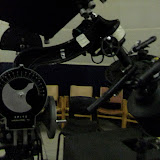
The planetarium at Dalhousie University is a beautiful old piece of equipment – built to last post-war and purchased the a forward-looking benefactor in 1955, it still serves the people of Halifax 55 years on. I was shown the setup by Dr Stephen Payne and I even got to see it in operation, a manual crank advancing the year, planets and the moon needing to be plugged in and put on the right setting.
What is truly incredible though is how it is still being used by various groups and runs a few shows a week. For a nominal fee visitors can be shown the night sky and it’s well worth a visit for the equipment alone. It’s an extremely intimate space too, with under 40 people accommodated within the dome, quite impressive considering that the planetarium welcomed around 3000 visitors last year alone.
Usage of the facility is increasing, and whilst there may never be enough demand or cost-efficiency for a full planetarium in Nova Scotia, this relic of a bygone age still proves itself more than up to the challenge of introducing the skies to the city. Add into that the fact that the planetarium director is actively expanding its reach to schools and families, long may this continue.
 |
| Dalhousie Planetarium |
What is truly incredible though is how it is still being used by various groups and runs a few shows a week. For a nominal fee visitors can be shown the night sky and it’s well worth a visit for the equipment alone. It’s an extremely intimate space too, with under 40 people accommodated within the dome, quite impressive considering that the planetarium welcomed around 3000 visitors last year alone.
Usage of the facility is increasing, and whilst there may never be enough demand or cost-efficiency for a full planetarium in Nova Scotia, this relic of a bygone age still proves itself more than up to the challenge of introducing the skies to the city. Add into that the fact that the planetarium director is actively expanding its reach to schools and families, long may this continue.
SNOLAB
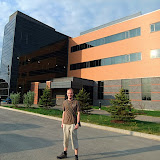
In 2003 I wrote a dissertation for degree about the Solar Neutrino Problem and cited (amongst others) Superkamiokande and the Sudbury Neutrino Observatory. Little did I know that seven years later I would be visiting one and talking about the other. It was only a message I sent through the science communication community lists about this blog and project that got me here in the first place; someone emailed me back to say that they worked at Science North and that I should visit, and as a result I found myself in the most incredible lab environment I have ever seen.
You can see my thoughts and feelings about the day on my personal blog entitled ‘2km’ at http://davidault.blogspot.com but here I want to mention some of the science behind the day too and pay homage to the feat of engineering and pioneering skill that I witnessed. It must also be mentioned that work is underway to quadruple the lab’s working space; this too is an eye-opening operation that deserves trumpeting.
Laboratories, especially those trying to spot minute flashes of light from almost massless particles on their rare interactions with matter, have to be absolutely pristine places. SNOLAB is no different; the air inside the ‘clean’ area of the lab is the same quality, contaminants-wise, as a hospital operating theatre. To accomplish this, large air filters are installed to trap particulates in the atmosphere inside the clean areas. SNOLAB however has another major obstacle to contend with in this regard; it is 6800ft down a working mine, and a similar distance along a very dirty, muddy drift before even reaching the lab.
Everyone must go through the strict protocols of showering before entry into the lab. Your mine clothes are left at the entrance and you are given a set of overalls and boots in which to walk around the clean area, along with a hair band, hard-hat and safety goggles. Blue sticky plastic is laid down at each doorway to trap any dust that may have made its way onto your boots. But why is something as simple as dust so much of a problem in any case? The answer is that down in the rock the dust contains more radioactive particles that, if found in the wrong place, could cause false detections in the experiments.
The original SNO experiment was decommissioned in 2007, but since then the work has moved forward to build on the successes of that original experiment. SNO+ is going to take the original SNO and put a liquid scintillator in place of the heavy water, a task that will require the inversion of the tethering filaments (due to liquid scintillator being lighter than the water around it, heavy water being unsurprisingly the opposite) – again no mean feat.
I should add, at this point, another interesting point of engineering for the company; the cage that ferries the workers down the mine is small, and is designed to fit 44 men in rows of four shoulder-to-shoulder. It is in this space that all equipment must fit or, if necessary, hang beneath the cage – in this instance though the item must be able to be pulled through the opening at operating level. Every piece of equipment must also be cleaned meticulously once it gets into the clean area, or arrive bagged up.
I cannot imagine how many trips were needed to get all the equipment down the mines, nor how many continue to happen each day as the new work is taking place. There are new experiments to search for dark matter particles – PICASSO and DEAP-3600 – and one for a supernova early-warning system called HALO. Many other scientific groups want to use the facility, shielded as it is from cosmic rays by 2km of rock, to collect data, and this is part of the reason behind the expansion.
There will be more information about the SNOLAB and its history from my guide, Dr Fraser Duncan on a future episode of the Jodcast. Suffice it to say, this was a tour of a facility that I will never forget, a chance to see building work happening in challenging surroundings and all thanks to the science communication community. To those of you who read this blog, thank you ever so much, and to Samatha Kuula and Fraser Duncan, my guides, and to Paul Arkilander, my host and chauffeur for the day, my deepest gratitude.
You can see my thoughts and feelings about the day on my personal blog entitled ‘2km’ at http://davidault.blogspot.com but here I want to mention some of the science behind the day too and pay homage to the feat of engineering and pioneering skill that I witnessed. It must also be mentioned that work is underway to quadruple the lab’s working space; this too is an eye-opening operation that deserves trumpeting.
 |
| SNOLAB |
Laboratories, especially those trying to spot minute flashes of light from almost massless particles on their rare interactions with matter, have to be absolutely pristine places. SNOLAB is no different; the air inside the ‘clean’ area of the lab is the same quality, contaminants-wise, as a hospital operating theatre. To accomplish this, large air filters are installed to trap particulates in the atmosphere inside the clean areas. SNOLAB however has another major obstacle to contend with in this regard; it is 6800ft down a working mine, and a similar distance along a very dirty, muddy drift before even reaching the lab.
Everyone must go through the strict protocols of showering before entry into the lab. Your mine clothes are left at the entrance and you are given a set of overalls and boots in which to walk around the clean area, along with a hair band, hard-hat and safety goggles. Blue sticky plastic is laid down at each doorway to trap any dust that may have made its way onto your boots. But why is something as simple as dust so much of a problem in any case? The answer is that down in the rock the dust contains more radioactive particles that, if found in the wrong place, could cause false detections in the experiments.
The original SNO experiment was decommissioned in 2007, but since then the work has moved forward to build on the successes of that original experiment. SNO+ is going to take the original SNO and put a liquid scintillator in place of the heavy water, a task that will require the inversion of the tethering filaments (due to liquid scintillator being lighter than the water around it, heavy water being unsurprisingly the opposite) – again no mean feat.
I should add, at this point, another interesting point of engineering for the company; the cage that ferries the workers down the mine is small, and is designed to fit 44 men in rows of four shoulder-to-shoulder. It is in this space that all equipment must fit or, if necessary, hang beneath the cage – in this instance though the item must be able to be pulled through the opening at operating level. Every piece of equipment must also be cleaned meticulously once it gets into the clean area, or arrive bagged up.
I cannot imagine how many trips were needed to get all the equipment down the mines, nor how many continue to happen each day as the new work is taking place. There are new experiments to search for dark matter particles – PICASSO and DEAP-3600 – and one for a supernova early-warning system called HALO. Many other scientific groups want to use the facility, shielded as it is from cosmic rays by 2km of rock, to collect data, and this is part of the reason behind the expansion.
There will be more information about the SNOLAB and its history from my guide, Dr Fraser Duncan on a future episode of the Jodcast. Suffice it to say, this was a tour of a facility that I will never forget, a chance to see building work happening in challenging surroundings and all thanks to the science communication community. To those of you who read this blog, thank you ever so much, and to Samatha Kuula and Fraser Duncan, my guides, and to Paul Arkilander, my host and chauffeur for the day, my deepest gratitude.
University of Western Ontario
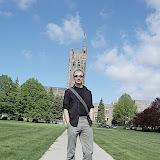
Whilst collecting interviews for the Jodcast (the twice-monthly astronomy podcast from Jodrell Bank, available from www.jodcast.net) at the University of Western Ontario in London, I was treated to a tour of the Cronyn Observatory on site. It's not a large observatory or a particularly unique one, but it does warrant a mention on here.
The observatory runs public viewing nights every Saturday evening from May to August, sometimes with talks from astronomers and a chance to view various objects through telescopes. From the telescope's website:
My thanks must go to Alex De Souza for giving us the tour, and also to Jodi Guthrie who organised all of the interviews with tremendous effort and goodwill.
 |
| London, ON |
The observatory runs public viewing nights every Saturday evening from May to August, sometimes with talks from astronomers and a chance to view various objects through telescopes. From the telescope's website:
It currently houses three telescopes on the same mounting: the original 25 cm refractor and small Schmidt camera as well as 30 cm reflector. When it was built by the Perkin-Elmer Corporation of New York, this refractor was the largest ever built in the western hemisphere.Pictures of this can be found at the above gallery, along with my personal favourite, the sundial positioned outside which is surprisingly accurate!
My thanks must go to Alex De Souza for giving us the tour, and also to Jodi Guthrie who organised all of the interviews with tremendous effort and goodwill.
Subscribe to:
Posts (Atom)

 Posts
Posts

